
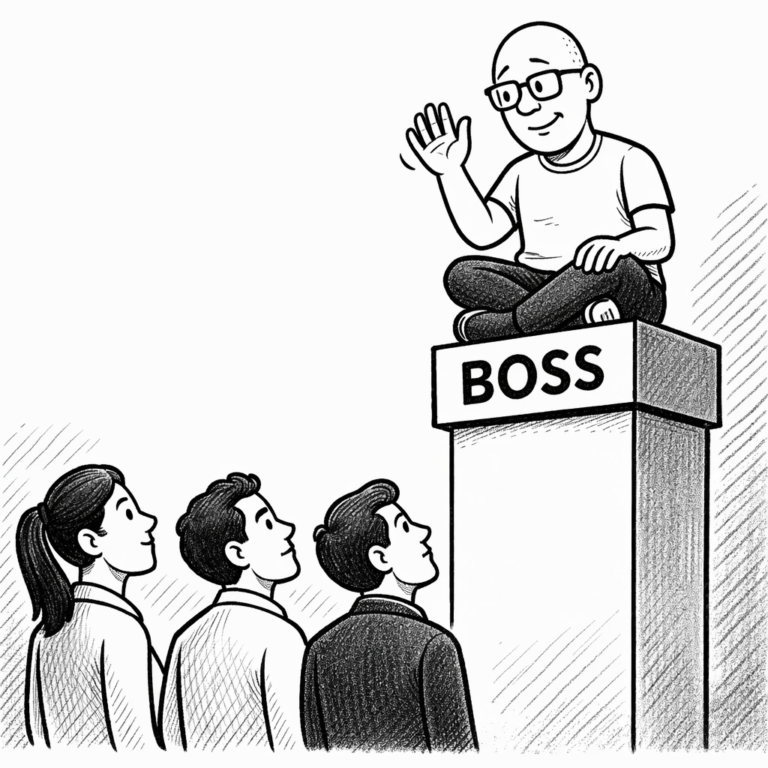
For years, I genuinely believed we ran a flat, non-hierarchical organization at AppSignal. I didn’t see myself or my co-founders as “the bosses” and everyone else as employees. I saw us as one team. I tried to be friendly with everyone.
I was wrong.
While I imagined us all sitting around the same table, the team saw a clear hierarchy. They saw founders, shareholders, and board members. They saw people who could ultimately decide their fate. No amount of casual Slack messages could erase that power dynamic.
“Non-hierarchical” had two different definitions in the same company. Mine was about intent and culture. Theirs was about reality and power. They were right.
I’ve been in management at AppSignal since we founded the company in 2012. In December, I stepped down from my role as Chief Customer Officer and am currently on a sabbatical before rejoining part-time as Brand Ambassador. The transition has given me time to reflect on something I should have understood years ago: as a founder or manager, you’re no one’s friend except your peers. This isn’t about any specific colleague. It’s about a structural dynamic I fundamentally misunderstood for far too long.
The Asymmetry I Didn’t See
I thought: I’m a great employer. I give people freedom, flexibility, and generous vacation time. Surely, they see me as part of the team, not as “management.”
What I failed to grasp: even if you do everything right, you’re still the person with structural power. An employee might like, respect, or even admire you, but they can’t be your peer because the power dynamic prevents it.
This hit me hardest when I’d put in years of effort, offering flexibility, remote work, reasonable workloads, and fair pay, only to watch someone become laser-focused on a single thing we didn’t offer that some other company supposedly did. Suddenly, all those years of goodwill evaporated. The extra vacation days didn’t matter. The flexible hours didn’t matter. The trust didn’t matter.
It stung. Like I’d bent over backwards only to be reduced to a line item on a compensation spreadsheet.
But from their perspective, they weren’t being disloyal. They were making a rational career decision. And that’s healthy. An employee should evaluate their options.
The problem wasn’t their behavior. I expected the relationship to work differently than it actually did.
What I Wish I’d Known Earlier
You can’t “friendship” your way out of a power dynamic. You can be warm, approachable, and genuinely care about people. But you cannot become their peer by simply acting like one. The structure won’t allow it.
I should have leaned into the reality of the hierarchy instead of trying to wish it away. I could be kind and fair without expecting the relationship to be reciprocal, as friendships are.
What Changes Now
As I return to AppSignal as Brand Ambassador, I’m no longer a manager. But I’m still a co-founder, board member, and shareholder. The power dynamic hasn’t disappeared; it’s just shifted shape.
I know now that I won’t be “one of them” in the way I once imagined. My previous position lingers. And that’s fine. I’m not trying to erase it anymore.
I’m focused on being clear about what I am: someone who cares deeply about AppSignal’s success and wants to build something lasting. But not someone who expects friendship where the structure makes it impossible.
That clarity feels like a relief. It’s not cynical. It’s just honest. And I wish I’d gotten here sooner.